By Dr. Muzmml Raufy, DDS — Flawless Dental Studio, Mira Mesa / Scripps Ranch, San Diego Last updated: June 2026
Patients ask me this almost every day. They have a missing tooth, they have two options in front of them, and they want to know which one is actually better — not which one their dentist prefers to place.
The honest answer is not "implants are always better." It depends on your bone, your adjacent teeth, your health history, your budget, and your timeline. Both options work. They solve the problem differently, and they behave very differently at 10 and 20 years. Here is how to think about it.
How they work — the core clinical difference
A dental implant is a titanium post placed surgically into the jawbone. Over three to six months, bone integrates around it. A crown attaches on top. The implant functions as an artificial root. It has nothing to do with the adjacent teeth — they are completely untouched.
A bridge spans the gap by crowning the two adjacent teeth (the abutments) and hanging a false tooth between them. Those adjacent teeth must be reduced — typically 60%–72% of their coronal structure — to accept the crowns. If those teeth were healthy before this, they are permanently and irreversibly altered as part of the procedure.
That is the most important practical distinction: an implant preserves your adjacent teeth; a bridge requires permanently modifying them.
What the long-term data shows
The research on implants is strong.
A 2012 systematic review reported implant survival of 95.6% at five years and 93.1% at ten years (Clinical Oral Implants Research, PubMed). A separate systematic review of single implant crowns found implant survival of 97.2% at five years and 95.2% at ten years (Clinical Oral Implants Research, PubMed).
Bridges hold up well too — in the short term. But the trajectory diverges over time. A 20-year retrospective study of conventional fixed partial dentures (bridges) reported a Kaplan-Meier survival rate of 66.2% at 20 years (International Journal of Prosthodontics, PubMed). Most of those failures involved decay at the abutment margins or crown failure at one of the modified adjacent teeth.
An implant, if it integrates and is maintained well, can outlast the patient. A bridge, on a long enough timeline, tends to require replacement.
When a bridge is still the right answer
Longer implant survival data does not make implants universally superior. A bridge is often the smarter clinical choice when:
Adjacent teeth already need crowns. If the teeth on either side of the gap are significantly decayed, cracked, or already crowned, using them as abutments adds function without additional sacrifice. The preparation was going to happen anyway.
Bone volume is insufficient. Implants require adequate bone height and width. If bone has resorbed significantly since the tooth was lost, grafting may be required — adding cost, time, and surgical complexity. In some cases it is not feasible.
Surgical risk is a factor. Uncontrolled diabetes, blood-thinning medications, bone density disorders, or prior radiation to the head and neck can affect implant integration. A bridge avoids surgery entirely.
Timeline matters. A bridge takes a few weeks. An implant, from surgery to final crown, takes three to nine months.
Budget is a real constraint. Implants cost more upfront. A bridge that achieves the same clinical function at a lower cost is not a lesser treatment — it is the right treatment for that patient's situation.
The bone loss factor most patients never hear about
When a tooth is lost and not replaced with an implant, the jawbone at that site begins to resorb. Without the stimulation of a root, the body gradually reduces the bone. Over years, this changes the jaw shape, can affect adjacent teeth, and makes future implant placement more difficult and more expensive.
A bridge does not prevent this bone loss. An implant does — the titanium post integrates with the bone and provides the stimulation needed to maintain it. For younger patients especially, this long-term bone preservation is a meaningful argument for an implant even when a bridge would work today.
Maintenance: what each requires long-term
Implants require the same care as natural teeth. The risk area is peri-implant inflammation — gum disease around the implant — which can develop if oral hygiene lapses. A systematic review found proximal contact loss around implant-supported prostheses of 28.6% in evaluated cases (PMC). Implants require monitoring; they are not maintenance-free.
Bridges require cleaning under the pontic — the suspended false tooth — with a floss threader or water flosser at every cleaning. If that cleaning does not happen, decay develops on the abutment teeth under the crowns, eventually requiring bridge replacement and often escalating to more complex treatment.
At 10–20 years, bridges more commonly fail from abutment decay. Implants more commonly require crown replacement while the implant body remains healthy.
FAQ
Does getting a dental implant hurt? The surgery is performed under local anesthesia. Post-surgical discomfort is typically managed with over-the-counter pain relief for 2–4 days. Most patients are surprised by how manageable it is.
What if I don't have enough bone for an implant? Bone grafting can rebuild volume in many cases. Dr. Raufy uses a CBCT scan to assess bone precisely before recommending a treatment approach. Some cases can be implanted same-day; others need grafting first.
Does insurance cover implants? Most PPO plans cover bridges more generously than implants. Many plans still classify implants as excluded or apply annual maximums that make coverage partial. The FDS team reviews your specific benefits before presenting treatment options.
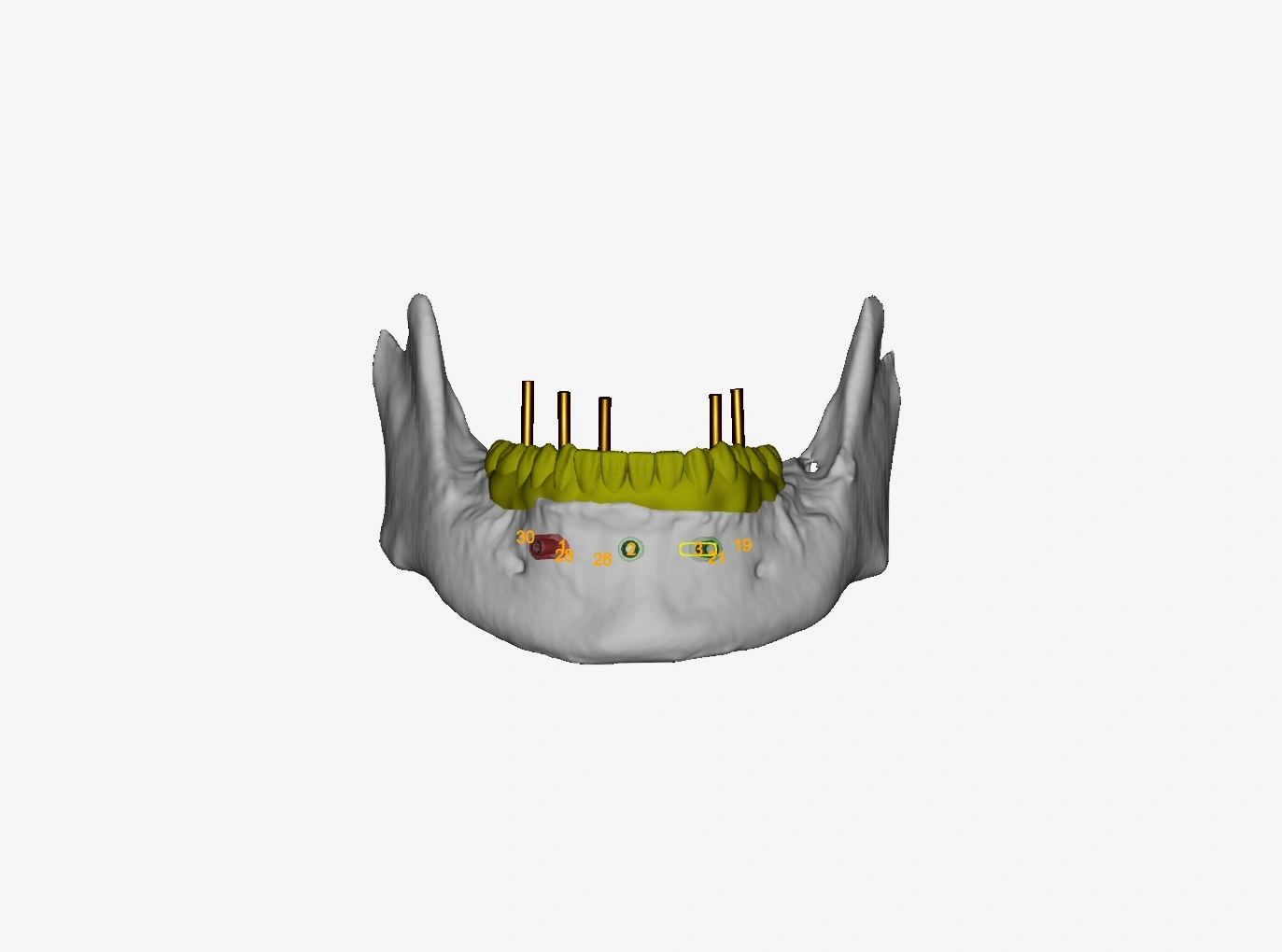
How does guided implant surgery work at FDS? Dr. Raufy plans the implant position in relation to the final crown — not just available bone — using CBCT imaging and digital planning software. A surgical guide transfers that plan to the mouth during placement, controlling angulation and depth. The result is predictable position even in anatomically complex sites.
Can I replace a bridge with an implant later? Sometimes. It depends on how much bone remains at the site after years without a root. The longer a missing tooth site goes unimplanted, the less bone there is to work with. If you are on the fence, a consultation with a bone scan will tell you where you stand.
Missing a tooth and want a straight answer on your options? Book a consultation at Flawless Dental Studio. Call 619-516-0018 or visit 9750 Miramar Rd STE 380, San Diego. Serving Scripps Ranch, Rancho Bernardo, Poway, and Mira Mesa.
.png)


.png)
.png)
.png)
.jpg)
.png)
.png)


