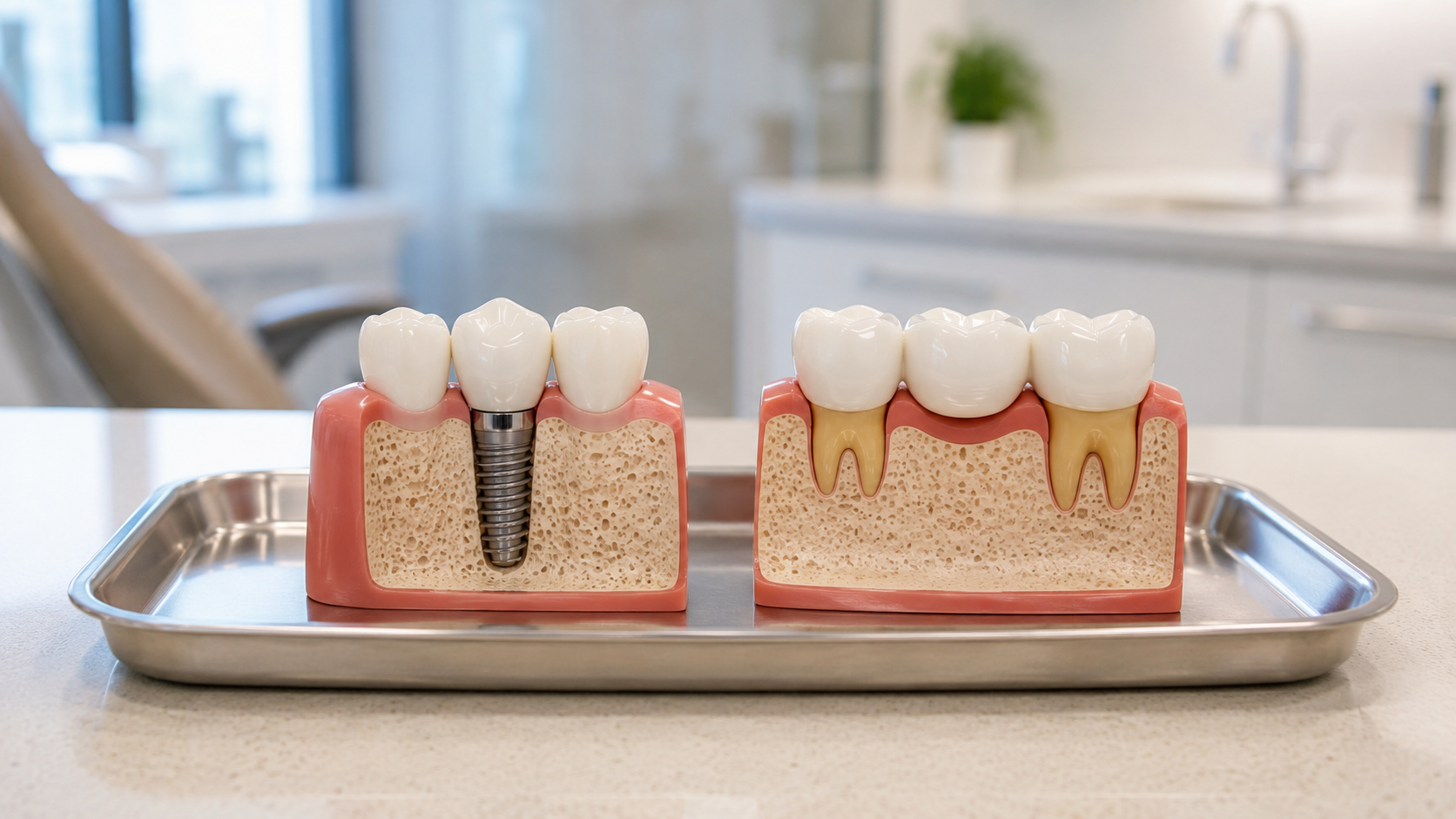
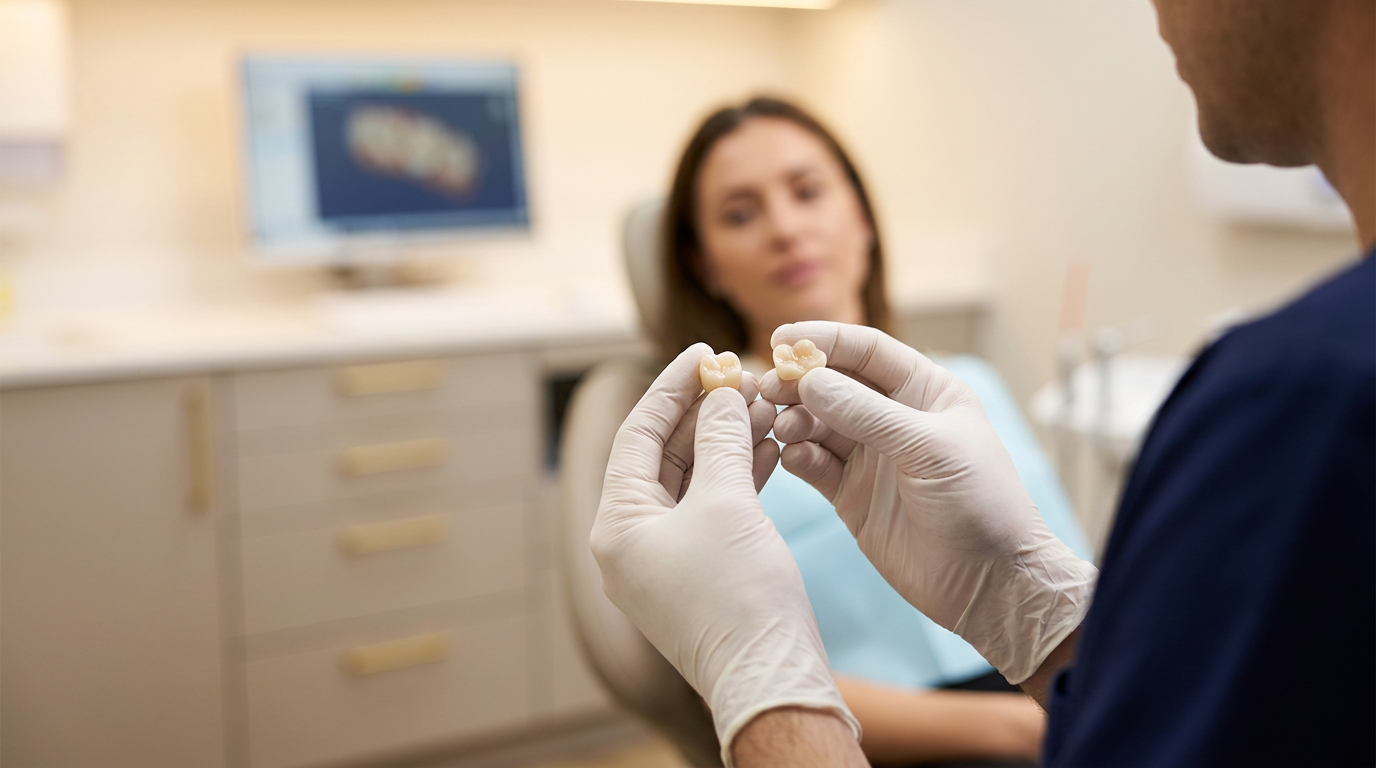
You may come in wanting straighter teeth, more even edges, or a smile that feels more like you. Before recommending treatment, your dentist may want a clearer picture of how your teeth meet. In selected cases, a Kois deprogrammer helps with that evaluation.
If the name sounds technical, the idea is straightforward: gather useful information about your bite before deciding what comes next.
What is a Kois deprogrammer?
A Kois deprogrammer is a removable, retainer-like appliance used to evaluate the bite. It temporarily prevents the upper and lower teeth from fitting together in their usual pattern, giving your dentist another way to assess the relationship between your jaws and tooth contacts.
The word “deprogrammer” refers to reducing the influence of that familiar contact pattern during the examination. The goal is to help your dentist understand your bite and, when appropriate, obtain a repeatable bite record—a record of how the upper and lower jaws relate.
Why might your dentist recommend one?
A smile plan considers more than the appearance of individual teeth. Your goals, gum health, existing restorations, and the way your teeth meet all belong in the conversation.
For some patients, additional bite information may help guide restorative or cosmetic planning. A deprogrammer is one tool for gathering that information; whether it is useful depends on what needs to be evaluated in your case.
At Flawless Dental Studio in Miramar, San Diego, personalized planning connects your goals with your examination findings. Whether you are considering Invisalign treatment or a comprehensive smile makeover, the first step is understanding which approach fits your individual needs. Not every patient needs a deprogrammer.
What can you expect?
If Dr. Raufy recommends one, ask what he hopes to learn and how the findings could affect your options. You should leave with clear instructions about:
- Wear: when to use the appliance, when to remove it, and how long the evaluation is expected to take.
- Care: how to clean it and store it safely in its protective case.
- Follow-up: when to return and what will be assessed at that visit.
Speaking may feel unfamiliar at first. Follow the instructions provided for your appliance rather than someone else's schedule online, and bring it to your follow-up appointment. If it causes pain, stop wearing it and contact the office; do not try to adjust it yourself.
What happens after the evaluation?
The next conversation should connect the findings to your original concerns. Ask: “What did we learn, and does it change my options?” Any proposed treatment should include an explanation of its purpose, benefits, risks, and alternatives. Wearing a diagnostic appliance does not commit you to further dental treatment.
A deprogrammer should not be presented as a guaranteed solution for jaw pain or grinding. Jaw-joint and muscle symptoms need their own assessment, and evidence that oral appliances relieve temporomandibular disorder (TMD) pain is limited.
Start with a conversation
You do not need to know which treatment you want before meeting with us. Schedule a consultation at Flawless Dental Studio to discuss your smile goals and whether further bite evaluation would be useful for you.
Sources